
A Buyer's Guide to Old Fourth Ward, Atlanta
By WilliamMarkDesigns | Atlanta Home Builder & Developer
Old Fourth Ward — O4W to anyone who's spent time here — is one of Atlanta's most layered and compelling neighborhoods. It's where civil rights history lives alongside the city's most celebrated food hall, where Victorian bungalows sit steps from the Atlanta BeltLine's most active trail section, and where the density of things to do, eat, and experience per square mile rivals almost anywhere else in the Southeast. For buyers looking at intown Atlanta new construction, Old Fourth Ward consistently ranks among the strongest neighborhoods for lifestyle, appreciation, and long-term value. This guide covers everything you need to know before buying.
A Brief History
Old Fourth Ward is one of Atlanta's oldest neighborhoods, originally settled in the early 1800s and formally designated as the city's fourth ward district.¹ It holds a distinction that few American neighborhoods can claim: it is the birthplace of Dr. Martin Luther King, Jr., whose childhood home still stands on Auburn Avenue. The neighborhood is also home to Ebenezer Baptist Church, where King preached alongside his father, and the broader Sweet Auburn Historic District — collectively one of the most significant civil rights landmarks in the country.¹
Like many historic intown neighborhoods, Old Fourth Ward experienced significant disinvestment through the latter half of the 20th century. By the 1990s, properties that are now worth half a million dollars or more were selling for less than $10,000.² The neighborhood's revival accelerated dramatically in the 2010s with the opening of Ponce City Market and the construction of the Atlanta BeltLine's Eastside Trail — two developments that transformed O4W from a hidden gem into one of the city's most sought-after places to live.
What Living in Old Fourth Ward Actually Feels Like
The BeltLine Is Right There
The BeltLine's Eastside Trail runs directly through Old Fourth Ward, connecting the neighborhood north to Piedmont Park and Ponce City Market and south toward Inman Park, Krog Street Market, Reynoldstown, and beyond. This stretch of trail is consistently the most active and lively section of the entire BeltLine system — alive with runners, cyclists, dog walkers, skaters, street art, and pop-up events on any given weekend.³
Residents describe the experience of living here as one of the best in Atlanta for walkability, mass transit, parks, restaurants and bars, concerts, shopping, and art fairs — with mostly quiet residential streets despite the neighborhood's bustling energy.⁴
Historic Fourth Ward Park, which sits directly along the trail, covers 17 acres and includes a lake, playground, splash pad, outdoor theater, skate park, and walking trails.³ The skate park, supported by the Tony Hawk Foundation, is one of the best in the city and draws a consistent community of skaters and spectators.⁴
The Food and Nightlife Scene
Old Fourth Ward's dining scene is exceptional by any measure. Chef-driven standouts include Marcus Bar & Grille from Marcus Samuelsson, Buena Vida Tapas Bar with its BeltLine-facing patio, and newer arrivals that keep the neighborhood's culinary reputation fresh.⁸ Staplehouse — a reservations-only restaurant with a seasonal tasting menu that donates its profits to The Giving Kitchen — has become one of Atlanta's most acclaimed dining destinations.⁵ Ammazza brings Neapolitan pizza and pasta to a stylish warehouse conversion on Edgewood Avenue, complete with an in-house DJ.⁵
The nightlife along Edgewood Avenue is equally diverse. O4W's rooftop scene is strong in 2026, with spots like Moonlight and the rooftop lounge at FORTH Atlanta offering skyline panoramas with craft cocktails. Sister Louisa's Church of the Living Room and Ping Pong Emporium — known simply as "Church" — remains one of Atlanta's most beloved and eccentric dive bars, with religious folk art on the walls, pews for seating, an organ used for karaoke, and a ping pong table upstairs.⁴
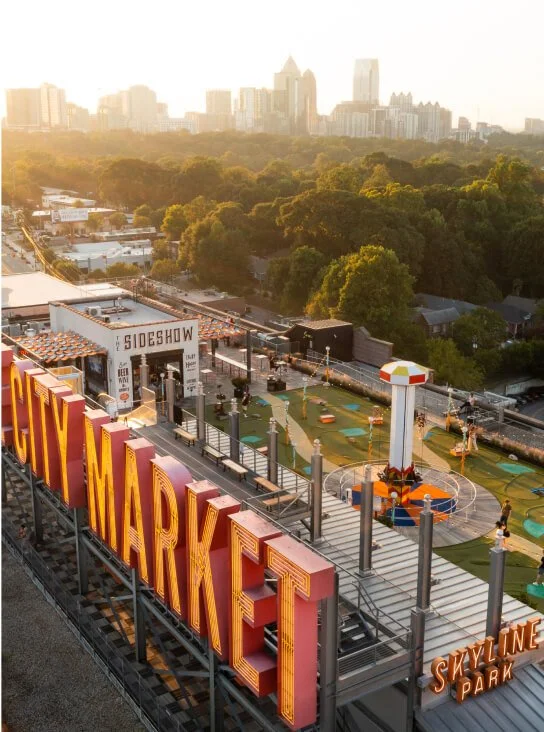
Ponce City Market, housed in the historic Sears, Roebuck & Co. brick warehouse, remains the neighborhood's crown jewel — a mixed-use destination with more than 34 restaurants, retail shops, a rooftop amusement park, and office space that draws a daily crowd from across the city.⁴
Cultural and Historical Identity
Old Fourth Ward carries its history visibly and intentionally. The Martin Luther King, Jr. National Historic Site draws visitors from around the world, but for residents it's simply part of the neighborhood's fabric — a reminder that O4W has always been a place where important things happen. The Sweet Auburn Historic District and Edgewood Avenue corridor give the neighborhood an authentic, layered character that blends civil rights heritage with contemporary urban energy.⁶
The neighborhood's mural scene along North Avenue and the BeltLine underpasses adds to that visual identity — an ever-evolving canvas that reflects Atlanta's creative community.⁴
The Old Fourth Ward Real Estate Market in 2026
Prices and Inventory
As of early 2026, the median home price in Old Fourth Ward is approximately $425,000, with an average sale price of $568,802 — reflecting a strong mix of entry-level condos, mid-range townhomes, and high-end new construction single-family homes.² The median sale price over the last 12 months is up 18% from the prior year,² making Old Fourth Ward one of Atlanta's strongest appreciating intown neighborhoods. Homes typically spend about 64 days on the market.²
Price ranges are genuinely wide. Condos can start under $200,000, while contemporary new construction single-family homes can reach $1 million or more — which means O4W serves a broader buyer range than most intown neighborhoods.²
Housing Stock
Old Fourth Ward's housing stock spans more than a century of architectural styles. The neighborhood offers a unique mixture of Victorian and Craftsman style homes, converted industrial lofts, and modern new construction homes, lofts and apartments.⁹ This variety gives buyers real choice: a restored 1920s bungalow with original hardwood floors and fireplace mantles, a light-filled loft in a converted warehouse, or a purpose-built new construction home with rooftop terrace, open-concept interiors, and contemporary finishes.
For buyers seeking new construction specifically, Old Fourth Ward is one of the most active intown markets in the city — and WilliamMarkDesigns currently has homes available and pre-selling there.
New Construction in Old Fourth Ward: What WilliamMarkDesigns Is Building
WilliamMarkDesigns currently has two new construction homes available and pre-selling in Old Fourth Ward, each reflecting the neighborhood's evolving character — modern design, thoughtful layouts, and walkability to the BeltLine, Ponce City Market, and Krog Street Market.
414 Arnold Street NE — A 4-bedroom, 4.5-bathroom new construction home offering 2,100 square feet across three stories in Old Fourth Ward, Atlanta. Located steps from the Atlanta BeltLine Eastside Trail, Krog Street Market, and Historic Fourth Ward Park, this home features a flex room, rooftop lounge, and a 2-car garage. Units A and B are both pre-selling now.
Both homes are designed by WilliamMarkDesigns, named to Modern Luxury Interiors' Atlanta Top 100 Designers list, and built with the same hands-on approach that defines every WMD project — with co-founder and chief designer Mark Hedges working directly with buyers on finish selections. Browse available Old Fourth Ward homes →
Is Old Fourth Ward Right for You?
Old Fourth Ward tends to attract buyers who want to be at the center of Atlanta's cultural and culinary life without sacrificing neighborhood character. It's a strong fit for young professionals, dual-income couples, and anyone who values walkability above almost everything else. The BeltLine access, the density of great restaurants and bars, and the historic identity give O4W a sense of place that's genuinely hard to replicate elsewhere in the city.
The tradeoff is price — O4W is not the most affordable intown option, and new construction here reflects premium land values. But for buyers who plan to stay for five years or more, the appreciation trajectory and lifestyle quality make it one of Atlanta's most compelling long-term purchases.
Join our early access list to hear about new WMD Old Fourth Ward listings before they go public.
Resources
Intown Elite, "Old Fourth Ward Homes for Sale Atlanta GA," accessed August 2026. https://www.intownelite.com/intown-atlanta-real-estate/old-fourth-ward-homes-for-sale-atlanta-ga/
Homes.com, "Old Fourth Ward Neighborhood Guide," accessed August 2026. https://www.homes.com/local-guide/atlanta-ga/old-fourth-ward-neighborhood/
VeryApt, "Old Fourth Ward Neighborhood Guide — Living in Atlanta," accessed August 2026. https://www.veryapt.com/guides/neighborhood/246-atlanta-old-fourth-ward/
Redfin, "A Guide to Atlanta's Old Fourth Ward Neighborhood," accessed August 2026. https://www.redfin.com/blog/atlanta-ga-neighborhoods/old-fourth-ward/
Unexpected Atlanta, "Things to Do in Atlanta's Old Fourth Ward: A Neighborhood Guide," accessed August 2026. https://unexpectedatlanta.com/things-to-do-in-atlantas-old-fourth-ward-neighborhood-guide/
Jon Effron, "Old Fourth Ward Real Estate | Community Guide," accessed August 2026. https://joneffron.com/neighborhoods/old-fourth-ward
Movoto, "Old Fourth Ward, Atlanta Homes For Sale & Real Estate," accessed August 2026. https://www.movoto.com/atlanta-ga/old-fourth-ward/
AtlantaFi.com, "Best Things To Do in Atlanta's Old Fourth Ward," January 2026. https://atlantafi.com/best-things-to-do-old-fourth-ward/
Best Atlanta Properties, "Atlanta's Old Fourth Ward Real Estate, Homes, Condos, Lofts," accessed August 2026. https://bestatlantaproperties.com/intown-atlanta-neighborhoods/old-fourth-ward/
