
By WilliamMarkDesigns | Atlanta Home Builder & Developer
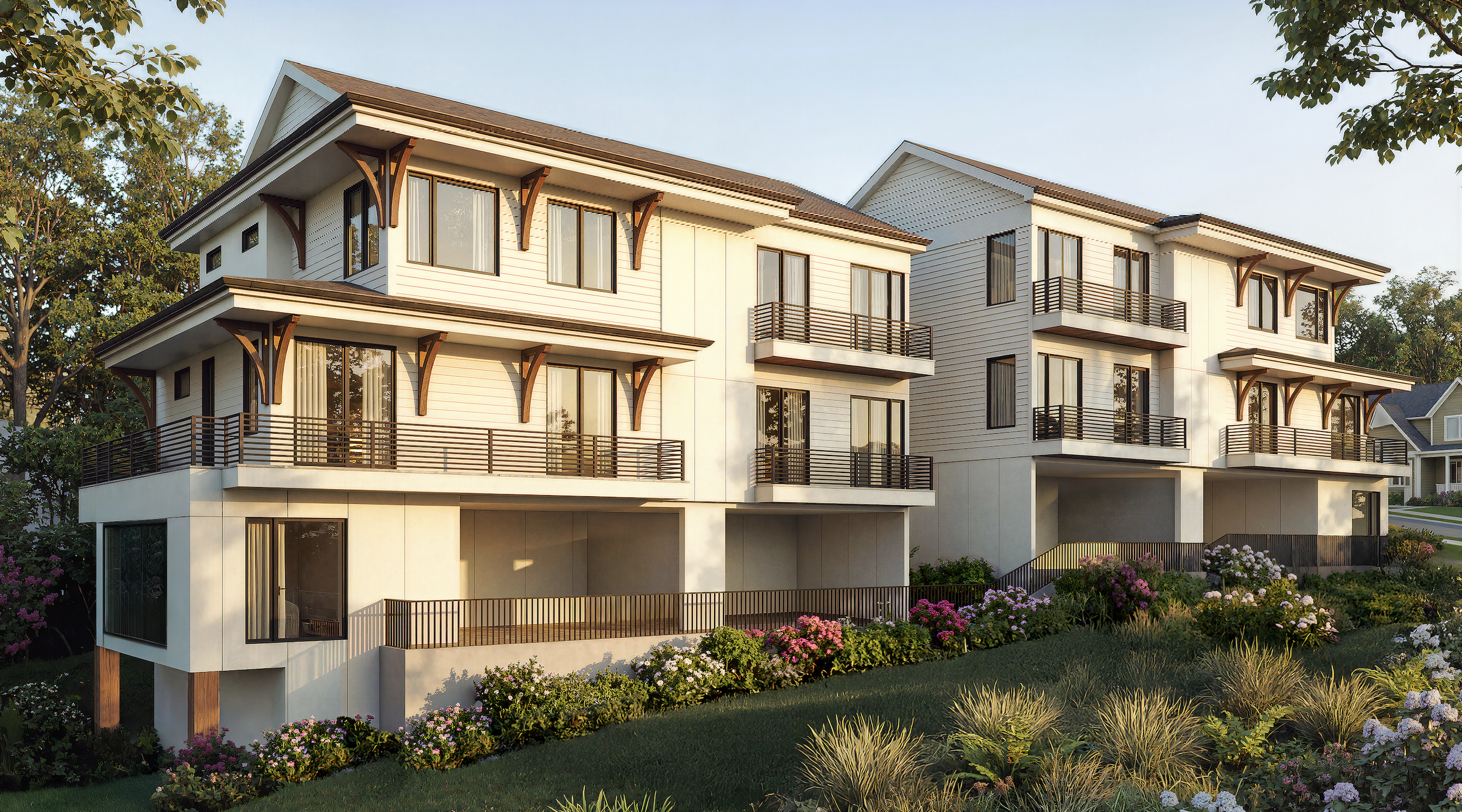
If you've been researching homes or land in Atlanta's intown neighborhoods, you may have come across the term "R-5 zoning" — in a listing description, on a zoning map, or in a conversation with a real estate agent. It sounds technical, but understanding what it means could significantly affect what you can build, what you can buy, and what your property is worth. Here's everything you need to know.
What is R-5 Zoning in Atlanta?
R-5 is a residential zoning classification used by the City of Atlanta that designates land as a Two-Family Residential District. In plain English: an R-5 zoned lot is legally permitted to have two separate dwelling units on it — most commonly in the form of a duplex.¹
This makes R-5 meaningfully different from the more common R-4 zoning, which allows only single-family homes on a minimum lot size of 9,000 square feet. R-5 drops the minimum lot size requirement to approximately 7,400 square feet (about 0.17 acres), and it opens the door to two-family construction that R-4 simply doesn't allow.¹
What Can You Build on an R-5 Lot?
Under Atlanta's zoning ordinance, an R-5 lot can accommodate:
A duplex — two separate, side-by-side or stacked dwelling units on a single lot. For a duplex, the maximum floor area ratio (FAR) is 0.60 of the net lot area, meaning the total livable square footage across both units can't exceed 60% of the lot size.²
A two-family dwelling — a primary home plus a secondary unit. In this configuration the secondary unit is capped at 750 square feet and the FAR for the main unit is limited to 0.50 of the net lot area.²
An Accessory Dwelling Unit (ADU) — R-5 is one of only three zoning classifications in Atlanta (along with R-4 and R-4A) where detached ADUs are permitted by right, up to 750 square feet.³
A single-family home — you're not required to build two units just because you're on an R-5 lot. A traditional single-family home is always permitted in an R-5 district.
R-5 Zoning Requirements at a Glance
The City of Atlanta's zoning ordinance sets the following standards for R-5 development:²
Minimum lot size: approximately 7,400 sq ft
Maximum lot coverage: 55% of net lot area
Front yard setback: minimum 30 feet
Side yard setback: minimum 7 feet on each side (reduced to 4 feet for ADUs)
Rear yard setback: minimum 7 feet (reduced to 4 feet for ADUs)
Parking: one off-street space per dwelling unit for homes with up to three bedrooms
Street trees: required along all public street frontages
One important design rule worth knowing: in a two-family dwelling configuration, the structure with less floor area must be located no closer to the street than the structure with greater floor area. In other words, the smaller unit can't sit in front of the larger one.²
Where is R-5 Zoning Found in Atlanta?
R-5 zoning is concentrated in older intown neighborhoods — places that were developed before modern single-family zoning became standard, when two-family buildings were a common and natural part of the urban fabric. <cite index="4-1">R-5 is common in older intown neighborhoods like parts of Cabbagetown and Reynoldstown.</cite>
This is exactly why WilliamMarkDesigns builds in these neighborhoods. The combination of R-5 zoning, BeltLine proximity, and strong buyer demand for intown living creates ideal conditions for thoughtfully designed two-family and duplex construction. Our Row 900 development in Peoplestown reflects this directly — <cite index="13-1">the Row 900 in Peoplestown uses a zoning classification that permits its duplex-style zero-lot-line configuration.</cite>
Why R-5 Zoning Matters for Buyers
If you're buying a home in an R-5 district, there are a few things worth understanding before you close:
Your neighbor can build a duplex. Unlike an R-4 neighborhood where every lot is restricted to a single-family home, an R-5 district means the lot next door could legally support a two-unit building. For some buyers this is a concern; for others it's a feature — it keeps the neighborhood's density and character aligned with older intown urban patterns rather than suburban sprawl.
Your own lot has development flexibility. If you buy a home on an R-5 lot, you may have the option to build an ADU, add a secondary unit, or eventually redevelop the property as a duplex — subject to lot size and setback requirements. This flexibility adds long-term value.
Investor activity is higher in R-5 areas. <cite index="13-1">The duplex potential is why investors are drawn to R-5 neighborhoods, and investor interest is what keeps property values climbing.</cite> For buyers, this means R-5 neighborhoods tend to appreciate strongly over time, but also that the character of the neighborhood can evolve as older structures are replaced with new construction.
Why R-5 Zoning Matters for Sellers
If you own a vacant lot, an older home, or underdeveloped land that's zoned R-5 in Atlanta, your property may be significantly more valuable than you realize — particularly to builders and developers who want to put the duplex-permitting classification to use.
The demand for R-5 lots in Atlanta's intown neighborhoods is real and growing. Builders like WilliamMarkDesigns are actively seeking R-5 zoned properties inside the Atlanta perimeter for new construction development. If you own a qualifying lot or an older home on R-5 land, there's a meaningful market for it.
Not sure if your property qualifies? The easiest way to check is the City of Atlanta's Property Information Viewer at gis.atlantaga.gov — enter your address and the zoning classification will appear on the right panel. If it says R-5, your property has duplex development potential.
WilliamMarkDesigns is currently acquiring R-5 zoned lots and older homes on R-5 land inside the Atlanta perimeter. If you own a qualifying property or know someone who does, we'd love to have a conversation. Learn more about selling your lot →
A Note on Atlanta's Zoning Rewrite
One important caveat for 2026: the City of Atlanta is currently in the process of rewriting its zoning code through the ATL Zoning 2.0 initiative — a comprehensive modernization effort with a complete draft released in December 2025. This means some R-5 classifications and their associated requirements may be subject to change in the coming years. If you're making a development decision based on R-5 zoning, it's worth confirming the current status with the City of Atlanta's Department of City Planning at (404) 330-6145 or at atlantaga.gov.
The Bottom Line
R-5 zoning is one of the most valuable and underappreciated designations on Atlanta's intown zoning map. It opens up duplex construction, enables ADU development, attracts investor interest, and supports the kind of moderate-density intown living that makes neighborhoods like Reynoldstown, Cabbagetown, and Peoplestown so desirable. Whether you're a buyer evaluating a neighborhood, a seller wondering what your land is worth, or a developer looking for your next site — understanding R-5 is essential to understanding how Atlanta's intown market actually works.
WilliamMarkDesigns builds modern new construction homes and duplexes across Atlanta's best intown neighborhoods. Browse available homes → | Sell your lot to us →
Resources
Bobbie Spiller Real Estate, "Atlanta Zoning: R3, R4, and R5," March 21, 2026. https://bobbiespiller.com/guides/atlanta-zoning-explained/
City of Atlanta Code of Ordinances, Chapter 7: R-5 Two-Family Residential District Regulations, Section 16-07.008. https://library.municode.com/ga/atlanta/codes/code_of_ordinances?nodeId=PTIIICOORANDECO_PT16ZO_CH7TMIREDIRE
Atladuco, "Atlanta ADU Zoning Guide (2026): Where You Can Build + Setbacks," February 26, 2026. https://www.atladuco.com/post/where-can-i-build-an-adu-in-atlanta
Steadily, "Residential Zoning Laws and Regulations Atlanta, GA in 2026," June 12, 2026. https://www.steadily.com/blog/residential-zoning-laws-regulations-atlanta
